A small city field guide

Trees of Bangalore

A notebook of bark, pods, shade, street corners and stories, following familiar trees across the city and the histories they carry.

Meet the trees

A useful correction: not every beloved Bengaluru tree is native. Of this first set, karanj, charcoal tree and kala siris are native to India or the wider Indian subcontinent. Jungle jalebi is from tropical America, and gulmohar is from Madagascar. Both are long-established, familiar parts of the city landscape.

Field guide 01

What you can notice from the pavement.

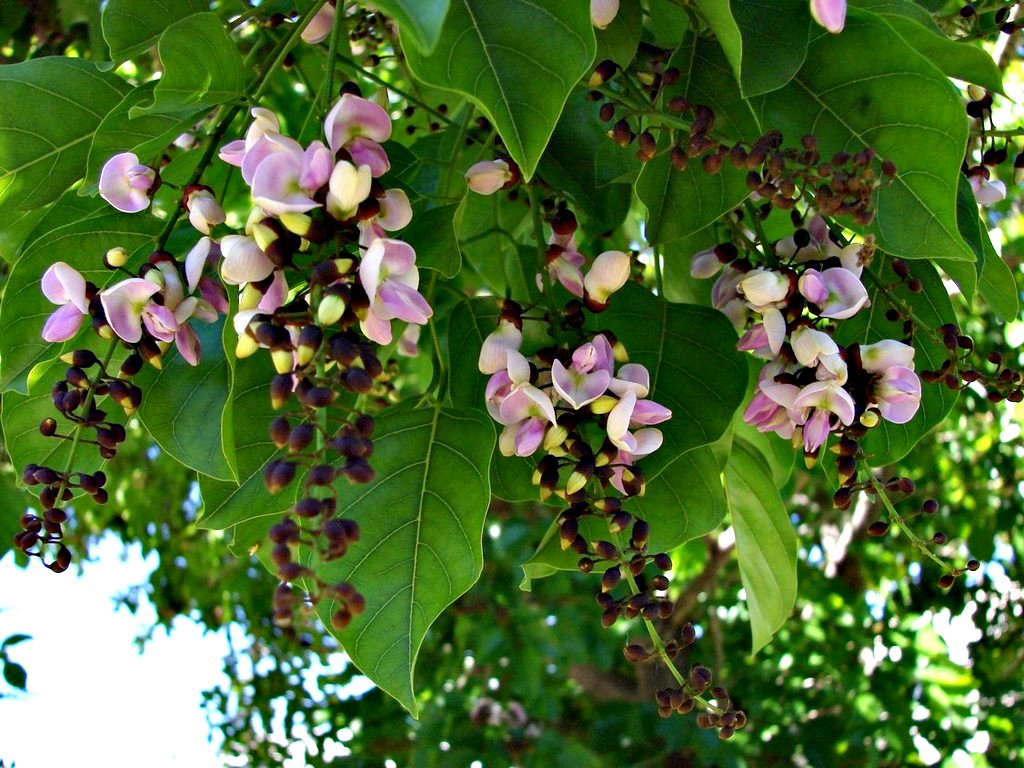
01Karanj tree, Millettia pinnata
Tatiana Gerus / Wikimedia Commons
NativeFabaceae

Karanj Millettia pinnata

Honge · ಹೊಂಗೆ

A generous shade tree with glossy leaflets, pale pink-white pea flowers and flat woody pods. It is the kind of tree that does not demand attention, but rewards a second look.

Field notes

Spot it

Look for a broad crown, compound leaves with a larger terminal leaflet, and flattened pods that persist after flowering.

Story

Karanj seeds yield a pungent oil historically used in lamps, soaps and other practical applications. Today the same oil-rich seed has also attracted interest as a biofuel feedstock.

In Bengaluru

Recorded in city parks and neighbourhood streets, including Jayanagar and Domlur. It suits the city's seasonally dry conditions well.

02Jungle Jalebi tree, Pithecellobium dulce
J.M.Garg / Wikimedia Commons
IntroducedFabaceae

Jungle Jalebi Pithecellobium dulce

Seeme hunase · ಸೀಮೆ ಹುಣಸೆ

A thorny, untidy-looking tree with tiny flowers and pods that curl into improbable loops. The white or pinkish pulp around the seeds is edible, sweet-tart and memorable.

Field notes

Spot it

Paired leaflets, small thorns and twisted pods are the giveaway. The pod shape is the reason for the playful “jalebi” name.

Story

The species is native from Mexico into northern South America, but has been cultivated and naturalised across India for so long that many people encounter it as an ordinary neighbourhood tree.

In Bengaluru

It appears in Bengaluru park surveys, including Madhavan Park in Jayanagar, where mature specimens were documented.

03Charcoal tree, Trema orientale
Vinayaraj / Wikimedia Commons
NativeCannabaceae

Charcoal tree Trema orientale

Kiruhale · ಕಿರುಹಾಳೆ

A fast-growing pioneer of disturbed ground and forest clearings. Its rough leaves and small berry-like fruits are easy to overlook, which is part of its charm.

Field notes

Spot it

Leaves are serrated, often slightly rough to the touch, with a noticeably uneven base. Tiny fruits ripen dark and attract birds.

Story

Older floras called it “the Charcoal Tree,” a clue to one practical use of its light wood. Ecologically, it is also a quick coloniser of openings and disturbed sites.

Why it matters

Pioneer trees are ecological first responders. They occupy bright, open ground quickly and help create the conditions in which other plants can follow.

04Kala siris, Albizia lebbeck
Dinesh Valke / Wikimedia Commons
NativeFabaceae

Kala siris Albizia lebbeck

Baage mara · ಬಾಗೆ ಮರ

A handsome deciduous shade tree with delicate-looking compound leaves, cream-green flower heads and long, pale pods that can rattle in the wind.

Field notes

Spot it

Look for a broad canopy, bipinnate leaves, powder-puff flowers and flat straw-coloured pods with visible seeds.

Story

One English nickname, “woman's tongue tree,” comes from the dry pods rattling in wind. The name is dated and unflattering, but the sound itself is a useful identification clue.

In Karnataka

Floristic records list the species from Bengaluru and many other Karnataka districts, and note its use as an avenue and shade tree.

05Gulmohar, Delonix regia
Pushpak Kolhe / Wikimedia Commons
IntroducedFabaceae

Gulmohar Delonix regia

Kempu turai · ಕೆಂಪು ತುರಾಯಿ

The city's summer extrovert: fern-like leaves, a low spreading crown and a sudden canopy of scarlet-orange flowers before the rains settle in.

Field notes

Spot it

The flowers are unmistakable, but the long dark woody pods and very fine bipinnate leaves make identification possible long after flowering.

Story

Gulmohar is native to Madagascar. It became a celebrated ornamental across the tropics because its wide crown creates both shade and spectacle.

In Bengaluru

It is repeatedly recorded in Bengaluru street and park surveys, from Jayanagar to Rajajinagar, and its April bloom has become a familiar marker of the hot season.

Sources & taxonomy notes

Photographs: Wikimedia Commons. Individual image credits and source pages are linked on each photograph.

Taxonomy and native ranges: Royal Botanic Gardens, Kew, Plants of the World Online; India Biodiversity Portal; India Flora / Herbarium JCB.

Bengaluru occurrence examples: Harini Nagendra and collaborators' Bengaluru parks and street-tree datasets on the India Biodiversity Portal.

Historical note for Trema: Flora of the Presidency of Madras, vol. 3, which records “Charcoal Tree” as a common name.

Names change over time. Karanj is still widely listed as Pongamia pinnata, while current treatments also use Millettia pinnata. Trema appears as both T. orientalis and the currently accepted spelling T. orientale in major databases.